
Video doorbells sit at the center of home entry management, and they hold a responsibility that goes beyond showing who is at the door. They must deliver meaningful security while respecting the homeowner’s control over personal data, guest visibility, and recorded footage. This balance matters because a doorbell camera operates at one of the most sensitive points of a home—the threshold between public access and private life. Homeowners want reliable monitoring, but they also want the freedom to filter what is captured, how long it is viewed, and who can access it. This tension shapes how modern devices are designed. From smart detection logic to user-managed visibility tools, today’s most advanced doorbells focus on giving owners both protection and choice. Products such as the eufy Video Doorbell E340 illustrate this approach by combining enhanced viewing angles with user-friendly controls, ensuring the device strengthens security without feeling intrusive.
The Technology That Protects Without Overexposing
Precision Viewing That Minimizes Unnecessary Capture
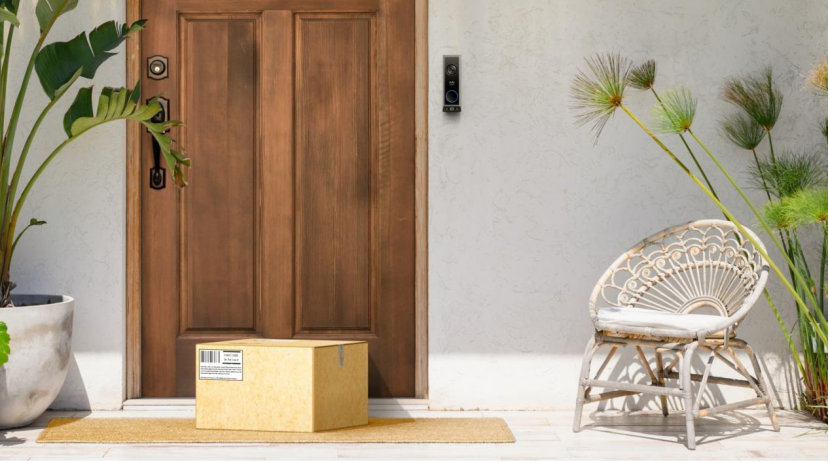
A privacy-aware doorbell must avoid recording more than needed, especially areas unrelated to a homeowner’s immediate space. Modern dual-camera systems help solve this challenge by narrowing focus to the true points of interest. The Video Doorbell E340 demonstrates this balance with its paired lenses: a forward-facing camera that concentrates on human activity and a downward-facing camera that focuses solely on the doorstep. By distributing visibility this way, the device captures essential footage while reducing the chance of recording neighboring walkways or unrelated outdoor scenes. This architecture supports security goals without imposing on others’ privacy or filling storage with irrelevant movements.
Smart Detection That Reduces Excess Alerts
Privacy also relates to interruptions—constant push notifications can feel intrusive or overwhelming. Advanced motion algorithms help maintain a respectful balance by judging relevance before sending alerts. Instead of flagging every passing shadow or distant movement, intelligent filtering allows the doorbell to react only to meaningful activity. When paired with an Add-On Chime, this experience becomes even more controlled because homeowners hear alerts only when something important occurs, such as a visitor approaching or a package arriving. The system supports calm daily routines while still maintaining vigilance where it matters.
User-Controlled Visibility That Builds Confidence
A balanced system allows users to decide how much or how little visual detail they want to capture. Many people prefer viewing visitors and deliveries clearly, but do not want continuous recording of the surrounding area. Video doorbells that prioritize user choice give homeowners tools to adjust detection zones, tailor notification sensitivity, and manage when the camera actively monitors. The E340’s design fits this model well; its dual-view structure naturally limits extra scenery, while its software lets users shape the experience further. The result is a device that feels helpful instead of intrusive, placing homeowners comfortably in charge.
The Security That Works Quietly in the Background
Layered Coverage for Real-World Entry Risks
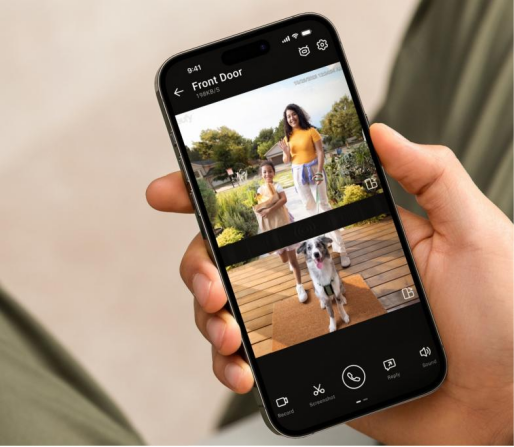
A front door presents multiple security challenges: approaching visitors, unexpected motion, and unguarded package deliveries. A single lens often misses one of these angles, which can leave gaps in awareness. A dual-lens doorbell works differently by treating each scenario as a unique risk. The forward lens protects the main entry, while the downward lens captures doorstep activity, including dropped-off items. This layered design isn’t simply about seeing more; it’s about solving the specific problems homeowners face daily. Comprehensive views of people and packages mean fewer blind spots and stronger situational clarity without requiring multiple devices.
Reliable Tools That Support Timely Action
Effective security depends on timely information. A doorbell that delays alerts is less useful in preventing package theft or responding to unexpected visitors. Systems designed with reliability in mind send notifications instantly, and pairing them with an Add-On Chime helps ensure the alert is heard anywhere in the home. When someone rings or motion triggers detection, the chime reinforces awareness without forcing users to carry their phones constantly. This creates a seamless balance: strong security delivered in a quiet, household-friendly rhythm.
Straightforward Feature That Encourages Wide Adoption
Security features hold value only if homeowners actually use them, which makes ease of installation essential. Devices that require complex wiring or multiple-step calibrations create friction, discouraging adoption and reducing the spread of secure entry systems. The E340 avoids this barrier with a simple plug-in approach: connect it to 2.4 GHz Wi-Fi, follow brief app instructions, and begin monitoring immediately. This simplicity supports widespread security use without sacrificing privacy because users can customize exactly how the system behaves from the moment it is activated.
Conclusion
Balancing privacy and security in a video doorbell involves more than producing clear footage. It requires designing technology that stays focused, resists oversharing, and respects homeowner control while still offering dependable protection at the entryway. Dual-camera systems, smart detection, adjustable viewing rules, timely notifications, and thoughtful installation processes all contribute to a healthier relationship between monitoring and personal boundaries. Devices such as the Video Doorbell E340 demonstrate how this harmony can feel intuitive: homeowners get meaningful visibility of visitors and packages without unnecessary capture of unrelated areas, and the paired Add-On Chime delivers alerts in the least intrusive way possible.